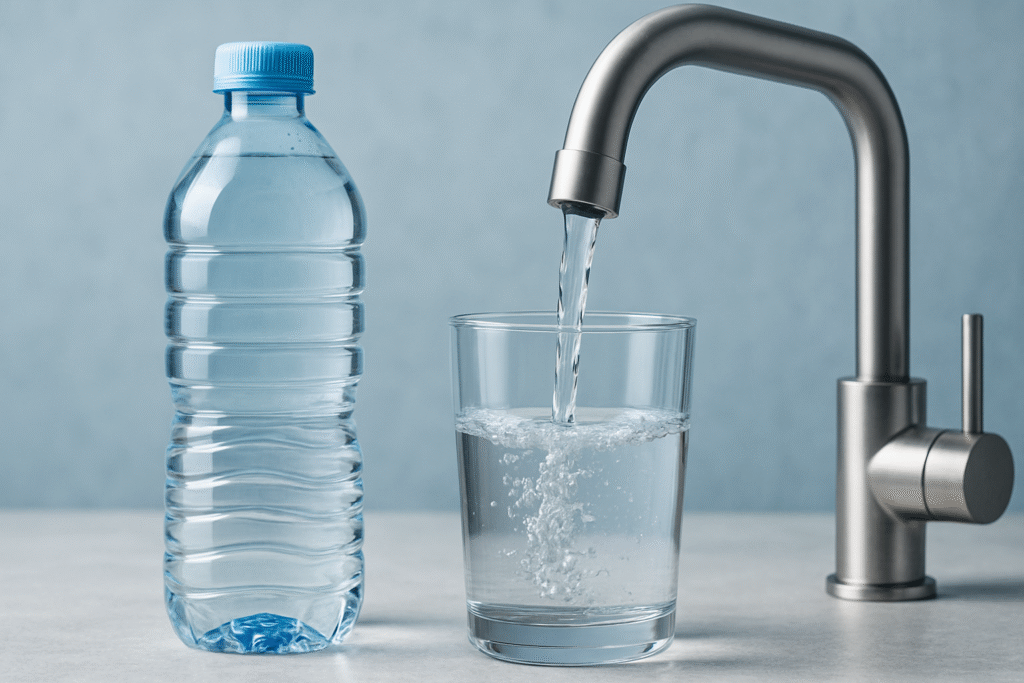
Walk down any supermarket aisle and you’ll see rows of bottled water promising purity, cleanliness, and an elevated hydration experience. Labels read “crisp,” “ultra-purified,” “enhanced,” or “perfected.” The marketing is flawless.
But here’s the truth most brands hope you never discover: most “purified” bottled water starts as ordinary municipal tap water. No mountain spring. No glacier. No mystical underground source. Just tap water run through industrial filters – then resold to you at up to 500–1000x the price you pay at home.
If that sounds like a scam, it’s because it almost is.
What Does “Purified” Actually Mean?
Unlike “spring water,” which legally must come from an actual spring, “purified water” has no romantic origin requirements whatsoever.
To qualify as purified, water must simply be:
- Sourced from any water supply
- Treated to meet purity standards
- Free from dissolved solids above a specific threshold
Because municipal water already meets strict safety rules, it’s the cheapest, easiest source for bottled-water companies.
Why Do Companies Use Tap Water?
1. It’s Cheap
Municipal water costs brands almost nothing – sometimes fractions of a penny per litre.
2. It’s Convenient
Cities maintain infrastructure. Bottling companies don’t need wells or springs. They simply tap into a municipal line, treat the water, bottle it, and sell it.
The Marketing Illusion of “Purity”
Many consumers assume purified means superior, but purified bottled water is essentially filtered tap water with exceptional branding.
Municipal tap water is tested and monitored constantly, often more frequently than bottled water plants.
Meanwhile, purified bottled water typically undergoes:
- Reverse osmosis
- UV treatment
- Ozonation
- Carbon filtration
These processes remove impurities – but they also remove minerals. Many brands then add electrolytes back in “for taste,” which should tell you everything.
Bottled Tap Water: The Perfect Business Model
Consider the numbers:
- Tap water at home: ~$0.004 per litre
- Bottled water: $0.60–$2.50 per litre
- Markup: up to 60,000%+
No other beverage offers this level of profit with so little transparency.
Why People Still Believe the Purified Water Myth
1. Clean, Minimalist Branding
White labels and ice-blue tones create an illusion of purity before you even read the bottle.
2. Fear of Tap Water
Despite strict regulations, consumers still distrust municipal supplies – something bottled brands exploit heavily.
3. Convenience
When you’re thirsty, you don’t analyse the label. You grab what looks cleanest.
The Environmental Cost
Producing bottled water requires:
- Extracting municipal water
- Purifying it
- Manufacturing plastic bottles
- Transporting them long distances
- Refrigerating them in shops
The environmental footprint is massive – especially considering the water wasn’t exotic in the first place.
How to Actually Drink Cleaner Water
If you want cleaner, clearer, fresher-tasting water, the most effective solution isn’t bottled water – it’s quality home filtration.
- Cleaner water on demand
- Better taste
- Reduced hardness
- Lower long-term cost
- No plastic waste
- No marketing tricks
The Bottom Line
The purified water myth is one of the bottled-water industry’s most profitable illusions. The vast majority of “purified” bottled water is simply tap water run through filters and sold back to you at extraordinary markups.
Once you understand the myth, it’s hard to justify paying for tap water in disguise.
Ready to Stop Paying for Tap Water in a Bottle?
If you want cleaner, fresher-tasting water without the marketing tricks or plastic waste, the smartest next step is upgrading your home water system.
Book your free home water test today and find out exactly what’s coming out of your tap — and how easily you can improve it.
Cleaner water, zero markups, zero guesswork.